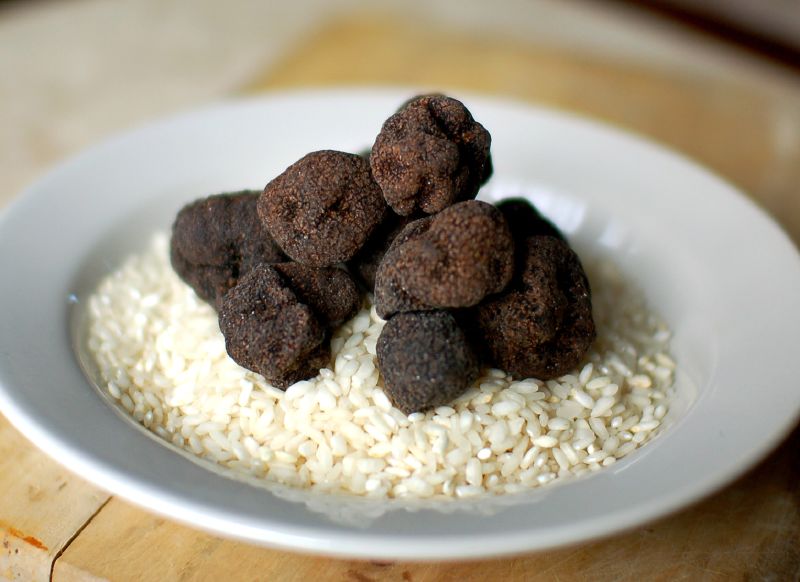
What does money smell like? Depends on how you mean. Cash can smell like strength and power, or like status and new leather. It lingers after it passes, a dab of L’eau Serge Luten behind the ear, or a wisp of Woodford Reserve that turns your head. We bury our longings and a passing moment brings them out… yeah, cash smells like excess. But bigger money smells like something else. Real money—and you know if you’ve ever been around it—smells like sex. Pure pleasure. Takes over a room without trying. Money at this level is a sociology all its own, flowing free and fragrant into your blood; exotic, erotic… it smells like control, like out-of-control, like a celebration, fluttering above it all, holding purview over everything it can claim, a zaftig woman in a scoop-collar blouse. Name it: fame, freedom, seduction, celebrity… in a given context money can smell like any of it. And in some contexts—even a cold Sunday afternoon in a foursquare Hilton conference room, in dark and light complexions, braw and beautiful under glass—it smells like all of it.
HE HANDS ME HIS CARD: Forty small stick-figure trees drawn in neat diagonal rows, overlaid with the words Sensitive Souls Truffiere in a polite italic script. The trees (I will learn later) might be beeches or birches or firs, because truffles grow under beeches and birches and firs and a few others, and Richard Holloway, Jr. quit his job as a merchant sailor to hand me this card, because he heard about a man in Oregon who bought a truffle dog and did well enough the first season to pay off his mortgage, and if I contribute to Richard’s crowdfunding campaign for the new Truffiere he’s starting I can “adopt” my own truffle tree for $400 and Richard will send me the GPS coordinates for it as well as the first truffle that tree produces, which I’ll also learn later takes about ten years. There are reasons a person might want the GPS coordinates for a tree—to visit it? to sit beneath it and read? to just pop by and check it out? and do I have to call ahead or can I come anytime?—but before I can access them the line is moving and my hand is stamped with the letters O.T.F., and the momentum of the moment carries me away from Richard Holloway and into the conference room at the Eugene Hilton, which is lit alive and pulsing with the final bustling hours of the Ninth Annual Oregon Truffle Festival.
This is what I know about the truffle in the final moment before I cross through the door: By the ounce, it’s one of the most expensive edible things in the world. It’s the thing people who love to talk about what they eat love to talk about. Through its combination of flavor, exclusivity, and rarity, the truffle is a first-ballot member of the Culinary Hall of Fame. I would say it’s similar to a mushroom, only better, but I don’t know that, I only think it, because in the final moment before I cross through the door I’ve never had a truffle, only gawked at and read about and thought about them. I know that of all the obscenely feted food people roll their eyes at, truffles are the godfather you don’t cross, because I saw Anthony Bourdain’s face when he ate at el Bulli, and when the waiter rhythmically shaved thick, swarthy slices of Perigord truffle over his Pommes Anna, Bourdain’s jaw dropped at least an inch, and then I heard him say after, “No human being deserves this,” and also, “Guilt tastes good. I’m going to hell.”
I also know something as bizarrely specific as a Ninth Annual Oregon Truffle Festival is going to cater to all the bizarrely specific needs of its crowd, because when I went online to buy tickets there were at least seven different ticket packages to choose from, and the cheapest was $600. Experience One (“The Epicurious,” $625) included a truffle and wine tasting, the Grand Truffle Tasting Dine Around with eight outstanding chefs, a breakfast and truffle hunting foray with a truffle dog, a winery tour, lunch, The Grand Truffle Dinner, and access to the Oregon Truffle Marketplace. Experience Two (“The Epicurious Gourmand,” $695) included all the above plus A Villa Afternoon at a local vineyard, and Experience Three (“The Gourmand at the Villa,” $750) also included dinner. Experience Four (“The Epicurious Grower,” $1,050) included a forum on truffle growing. And I know that all of these experiences, plus a few more, sold out fast, and that the four hundred and fifty-nine people who paid for them paid a total of $168,570, but the two hundred and twenty-five people on the waiting list left $105,000 in their pockets. As it goes, the Sunday Marketplace—“including truffle tastings, artisan foods, a truffle dog demonstration, and lecture series”—cost 20 bucks at the door; 15 if you skipped the wine. And there we are.
There may be no better way than the American food festival to explore what the words “life, liberty, and the pursuit of happiness” really mean to people in this country. There is a festival for almost every level of adventurous eating an American could love, from lettuce (Arizona) and Spam (Hawaii) to baby food (Michigan) and roadkill (West Virginia). The metanarrative of the food festival crowd has always been much more appealing a draw to me than the festivals themselves. The Clinton, Montana Testy Festy (sponsored by Budweiser) is not a chance to celebrate the testicle, but to celebrate the people who celebrate the testicle. Watching the type of man to eat Rocky Mountain Oysters off a Styrofoam tray is exponentially more interesting than eating one yourself. Eighty thousand people are expected at this year’s Fellsmere Frog Legs Festival, pursuing their own happiness with grits, coleslaw, and hushpuppies on the side. So the Oregon Truffle Festival then is not entirely about the truffle, what it means to Oregon, or whether it could ever challenge the wine industry here. It’s about the first man I saw through the door, a cognac glass to his nose, smelling what looked like a burnt knob of bone the color of obsidian. He closed his eyes to draw in a breath, letting the crowd mill around him as his nostrils tightened and released—still. He held the glass for a moment, then without a word opened his eyes and lowered it to the table, never breaking stuporous glare with the wall ahead of him, focused on nothing…
When he finished I walked over and slid the glass off a small piece of paper underneath, reading No. 40: 116 grams. Spain. $255.74.
THE TRUFFLED DUCK TALLOW CATCHES MY EYE FIRST, then the black truffle Parmesan shortbread, then the truffle-infused hazelnuts, and by then I know what I’m in for. The cavernous conference room is outlined by forty-four folding tables showcasing forty-four of the ways—to put it obtusely—I can buy a chance to see truffles make normal food better. The tallow is $20 a jar, the shortbreads $10 each, and it doesn’t even take a full lap around the room for me to realize the simple truth behind this thing we’re all here to see: that between the black truffle macarons ($3), the tote bags ($5), the truffle shavers ($40), the dog tags ($10), and the black truffle ice cream with toasted pecans and a caramel swill ($4), the magic of the truffle is not at all what it is, but what it can make other things. In fact, as a fungus, on its own the truffle is one of the most wholly unremarkable things on earth. Fancy it up if you will—a symbiotic fungus that attaches to the root systems of different trees, yes, buried beneath soil and leaf litter and rooted out as a delicate and difficult delicacy first by pigs, then rakes, and now dogs, yes—but at heart it’s just a fungus. And yet, a fungus magical enough in its powers of alchemy that when Napoleon wanted nothing on earth more than an heir he began a diet of truffle-stuffed turkey and champagne and was transformed into a father; magical enough to potentially transform Oregon’s abundant forests of firs into a $1.5 billion industry. And before it all, before we folded them into ice cream, slapped them on tote bags, shaved them over our Pommes Anna, and stuffed our turkeys with them while dreaming of heirs, the first trick this fungus performed was on itself, when the Latin label, tuber—clumsy and bulbous and translating to “lump”—would never support such a charmed thing, and the French took it over, transformed it into truffe, into their own, into legend, into truffle.
Of course, seven years ago a man paid $330,000 for one of these things, so clearly there’s a very real level of insanity at work here. To wit: no more than fifteen minutes into my time in the room, and still with no real idea what I’m here to experience, I am standing in a line to purchase white truffles at $20 an ounce. Not only have I never purchased truffles before, I have no idea what to do with them. I don’t even really know what an ounce is. Am I allowed to ask questions? How hard do I need to smile to seem like I know what I’m doing? Have I ever bought anything from someone wearing rubber gloves? All hopes of fully understanding trufficulture in the two hours I have at the O.T.F. long abandoned, my goal at this point in the afternoon is to just understand how they’re different than mushrooms. With the full acceptance that I cannot simply ask Cambra Ward of New World Truffieries, who is now looking at me with a tray of two-dozen Oregon whites in front of her, So are these pretty much shiitakes?, I am left only with the option to fake it. And as I am about to point triumphantly to the truffles of my choice—Oh she’s a beaut, let’s box her up. That will go great with, well, I don’t have to tell you…—Cambra holds up a finger and turns to a woman behind her.
“Let’s swap these out,” she says. And then—
A new box of Oregon white truffles comes out. Filled to the lid. Laid on the table before me. Then the top comes off, and I’m smiling the half-smile of a rusty confidence man, and within five seconds the forbidden effluvia of sin is in my nose and after twenty-six years of not knowing—I know. What does money smell like? It smells like gasoline. And Cambra says, “An ounce, then?” and within a minute I thank her and leave, five white diamonds in a box at my hip.
HE CALLS TO TOM IN ITALIAN: Vai. Venite. Soggiorno. Despite appearance and cost, the O.T.F. is not simply a three-day retreat for truffle dilettantes. Oregon isn’t yet a global player in the truffle game: can’t hang with France and Italy. The industry is nascent here, and so the O.T.F. is primarily the a showcase of arms, a lavish and impressive exhibition of Oregon’s unique terroir and its people’s passion for good things. It’s the only festival of its kind in North America, and so Tom is a nice get. “In my opinion,” his handler will say at the 2:45 demonstration, “this is the finest truffle dog in North America.” He’s not exaggerating. A few years ago Tom sniffed out two hundred pounds of Tennessee black truffles in one season that sold at $600 a pound, which means that not only does he probably command more respect from his community than I ever will, but that he definitely has more life insurance.
Seven years ago all truffles were harvested with rakes. But rake foraging is clumsy, precarious, and bad for the dirt. For centuries truffles were hunted by pigs, which was effective because black truffles contain the same chemical substance as the testes of wild boars, but not so effective because the pigs always ate them. In many ways dogs are the perfect solution: trainable, abundant, adorable, and wildly successful. Any breed can do it. But some breeds do it better than others. And if Jim Sanford came here with his dog Tom for anything, it’s to show that one breed does it best.
Maybe “finest truffle dog in North America” isn’t something that can be measured. It’s no matter. Tom is panting at the center of a circle of one hundred people, phones out and smiles on, as Jim sells his résumé: Born in Italy, Tom is one of only four hundred and fifty Lagotto Romagnolos in the United States—a thick, curly-furred dog standing about two feet off the ground. Two days ago Jim and Tom flew in from Tennessee for Tom to show twenty people who paid $595 each how their normal dogs can become Truffle Dogs, and for two mornings in the Oregon forest Tom showed them how to do it. By Saturday afternoon every dog—all breeds, all ages, all without experience—had found a truffle. Twenty for twenty. I make a note to Google “lagotto romagnolo” when I get home (and after writing something like “lagotow romanyolo,” a second note to Google the spelling), and when a man in Europe tells me he will sell me a puppy named Prince for $2,000, I think back to Jim, who claims that Tom could have found thirty pounds of truffles—an $18,000 haul—in four hours, and if the truffle has any magic at all I know it then, when sitting at my computer the idea of buying a European dog on the Internet seems like a great investment opportunity.
The principle behind training a dog to find truffles is no different than training one to find contraband at an airport. Jim has it down to three steps: imprint (Tom smells a piece of PVC pipe stuffed with cotton soaked in truffle oil), find (Tom learns to search for the smell), alert (Tom barks it out). Six weeks start to finish. He’s ready to show us. Jim leads the way outside, tall and lean in Wranglers and a dress shirt. He trained elephants for twenty-seven years, and though his golden goose may be a curly dog with a large brown spot, his brass belt buckle still has tusks. He holds up three truffles on the Hilton back patio. Eyeing a concrete planter in the corner, Jim turns his back to the crowd and digs three small graves. The crowd has divided into two factions: one watches Jim, one is petting Tom. “When we smell spaghetti and baked bread,” Jim says, “he smells the molecules.” Then he shouts: Tom! Venite!, and Tom puts to work. The crowd is pressed tight, tracing the dog’s trot across the patio with our necks. I take a moment to appreciate what I’m watching: Tom is a dog who is so good at what he does that he makes other dogs want to be better. He contains the powers of motivation. After two days he turned a ragtag group of poodles and beagles into an honest-to-god gang of truffle hunters. With a simple trot he has one hundred people on their toes, not just watching him, but absolutely pulling for him. He knows more Italian than I do. Let it be measured, let it be said: Tom is the finest truffle dog in North America.
Jim steps to the side. Tom hops into the planter, begins to root around. He is a picture of focus. Though Oregon isn’t yet there, some American perigord truffles can go for $800 a pound. In France, $1,100; in Italy, $5,100. Watching Tom, I am filled with understanding. I couldn’t know in that moment before Cambra Ward that my question was off. I couldn’t know the reason we were all here: because everyone who knows truffles can tell you the first time the gasoline stung their nose—the moment the chain connecting fungus to dirt to dog to plate was complete, and for one ephemeral moment it all flowed free and fragrant into their blood, and none of it was done with a machine—and they knew with a sharp clarity: these are not mushrooms. In the week after the O.T.F. my wife will use the five white truffles we bought to infuse ricotta, eggs, butter, salt, and whipped cream, which she served over a hazelnut chocolate clafoutis I have never done anything to deserve, and the truth is… truffles kind of taste like gasoline, too. I watched her shave thick swarthy slices over baked bruschetta with turnip honey, over caramelized leeks and potatoes, over roasted root vegetable risotto, and my jaw held clinched. I ate them thick and thin, let them sit on my tongue, swallowed them whole. I fought like hell against the word disappointed. Every night I sat at my table and thought: I’m letting Tom down. But standing on the patio—before I taste any of it—I only know them in my nose, and so I know them completely. The festival inside is slowing to a rallentando, and as the January wind whips through the downtown streets our women are in dresses and heels. We cross our arms and keep our eyes on the dog. He sniffs. It’s not out of the question to suggest there is $50,000 in ticket sales among this circle. For a moment Tom works, and then—a pause. Silence. Tom raises his head… then his leg, and for the next five seconds we hug ourselves and watch him pee.
flickr // ulterior epicure

 Scott Latta